
We Walked Into a Monsoon Storm on Harishchandragadh — And It Was Worth Every Step
“Thank God it’s Friday!” Sitting in a stalled rickshaw for a miserable hour on the way to Andheri Station, that thought was my only lifeline. I was tuned out of the honking and the heat, my mind already halfway up the slopes of Harishchandragad with my friend Nakool. We were both chasing the same escape—ready to trade the city’s heat for the mountain’s mist.
At the time, we had no idea what Harishchandragad had in store for us. From the moment we stepped off the last ST bus at Khubi Phata at 3:00 AM, until we finally stumbled into the quiet village of Pachnai, we pushed through a monsoon trek so intense it remains etched in our memories to this day. It wasn’t just a weekend trek; it was a journey we will never forget.
Stepping Off the Bus at Khubi Phata — Where the Harishchandragad Trek Begins
Stepping off the bus at Khubi Phata, we were immediately swallowed by a thick, midnight fog. We took shelter in a small roadside shack, hoping for a few hours of rest before the sun rose. It was there we met a group from Pune who gave us our first reality check: busloads of trekkers had already arrived, and finding a spot in the caves at the top was going to be a battle.
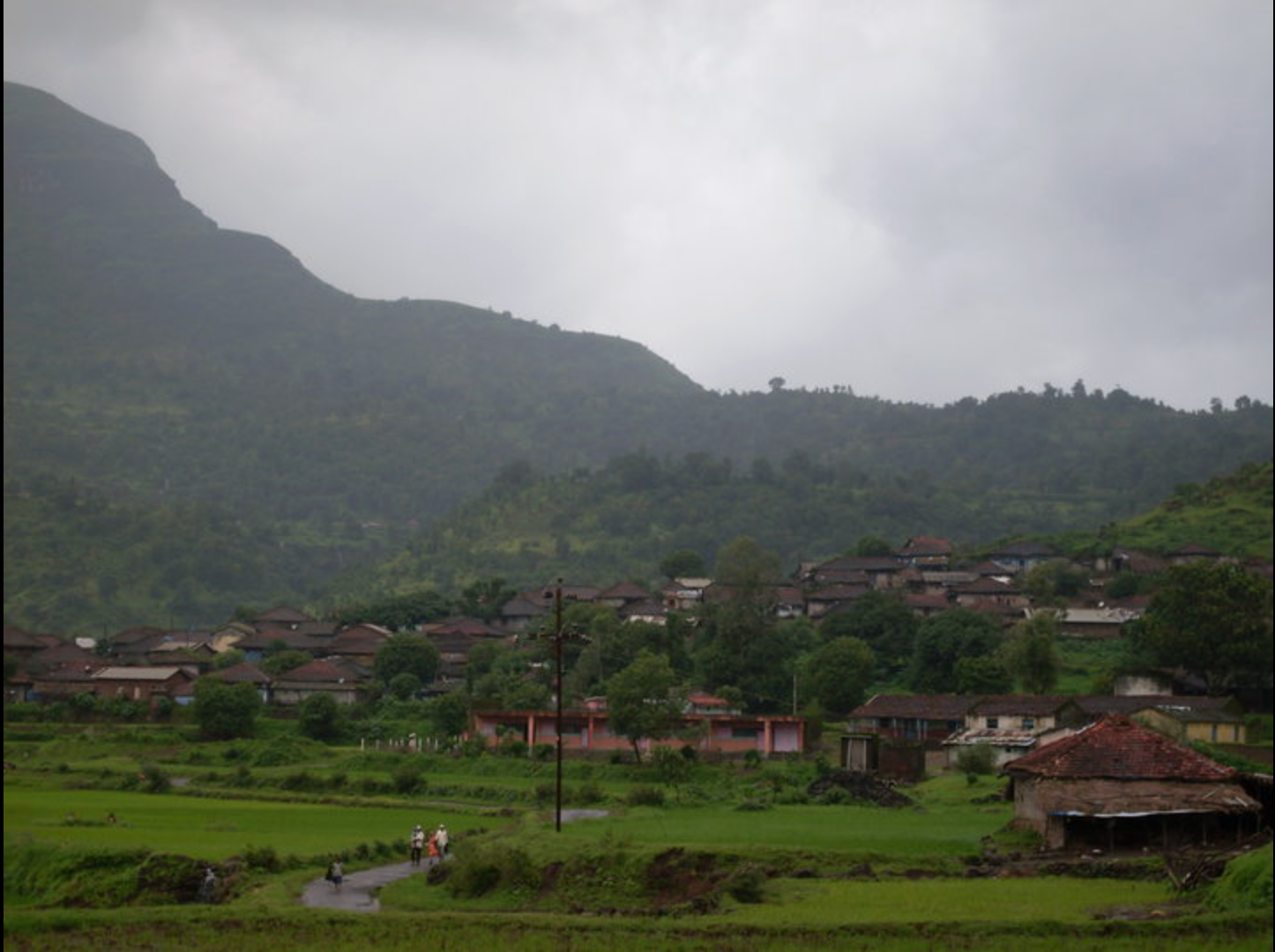
The Walk to Khireshwar — A Heavenly 5 km Along the Dam
The fog was so dense it actually delayed our start, but once we set off, it provided a silver lining. The 5 km walk from the Phata to Khireshwar village, along the banks of the dam, became one of the most incredible walks of my life. With visibility reduced to just a few feet in front of us, the world outside our immediate path simply vanished into a wall of white, leaving only the sound of our footsteps and the rhythm of the dam’s water. It felt less like a hike and more like a heavenly walk amidst the clouds.
An hour later, we reached Khireshwar village. A simple breakfast of Poha and steaming hot tea was exactly the fuel we needed to liven our spirits for the next push. We set out on the well-beaten track, winding through the dense jungles at the base of the fort.
Tolar Khind — The 100-Foot Rock Wall on the Harishchandragad Trek
As we gained altitude, we reached Tolar Khind, the massive 100-foot rock wall that stands guard over the plateau. While resting at a villager’s makeshift hut with a refreshing glass of lime juice, the conversation took a serious turn. Speaking with him, the reality set in: crossing the Khind in this weather was going to be a dangerous, high-stakes affair.
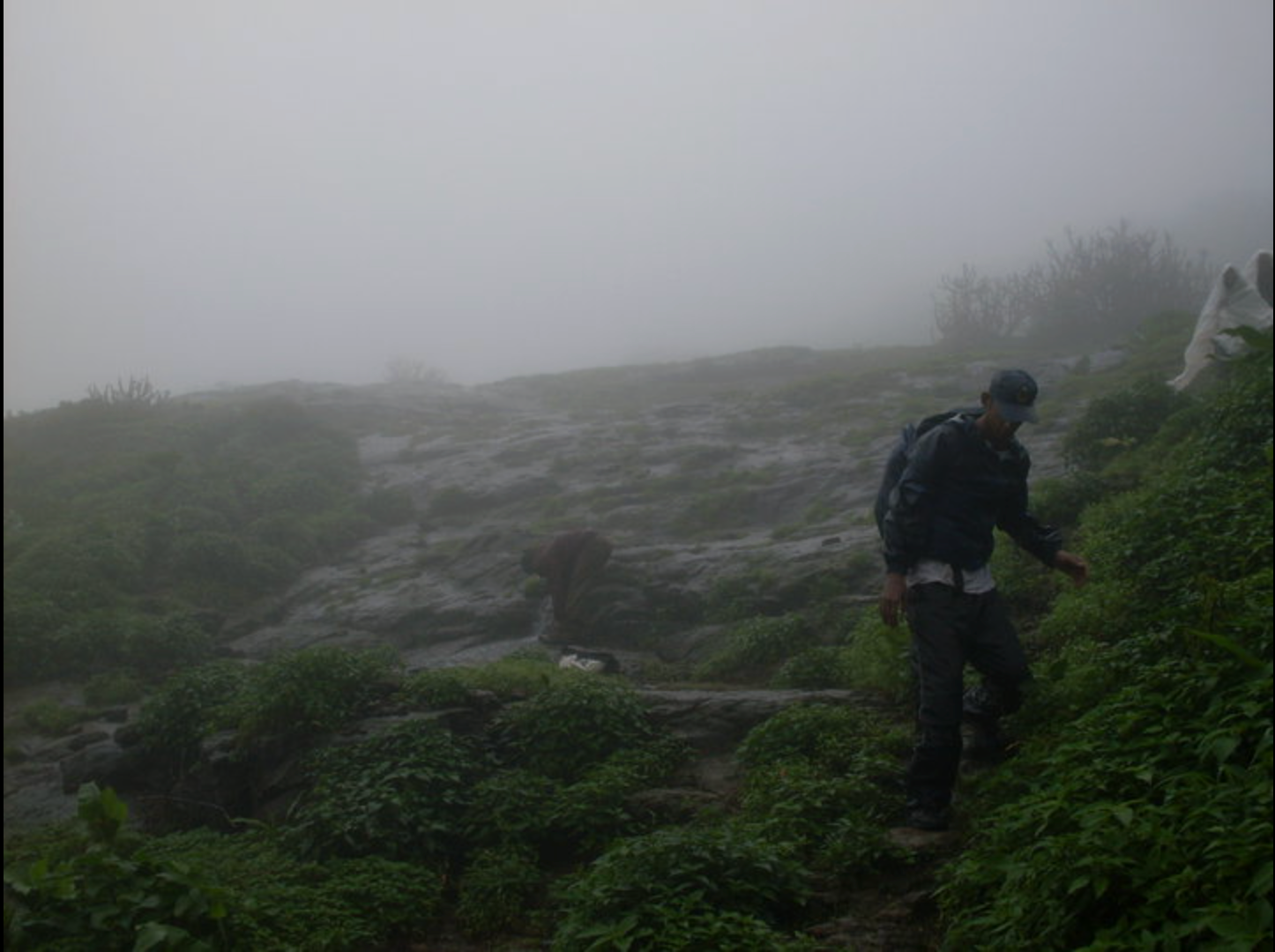
The 100-foot rock wall was the exact adrenaline hit I’d been looking for. Exposed to deep valleys on one side and a sheer rock face on the other, the path demanded absolute focus. The rain was relentless, and the wind felt like it was physically trying to push us off the trail. In that whiteout of fog, we were forced to move with a slow, deliberate caution—every grip and footstep mattered.
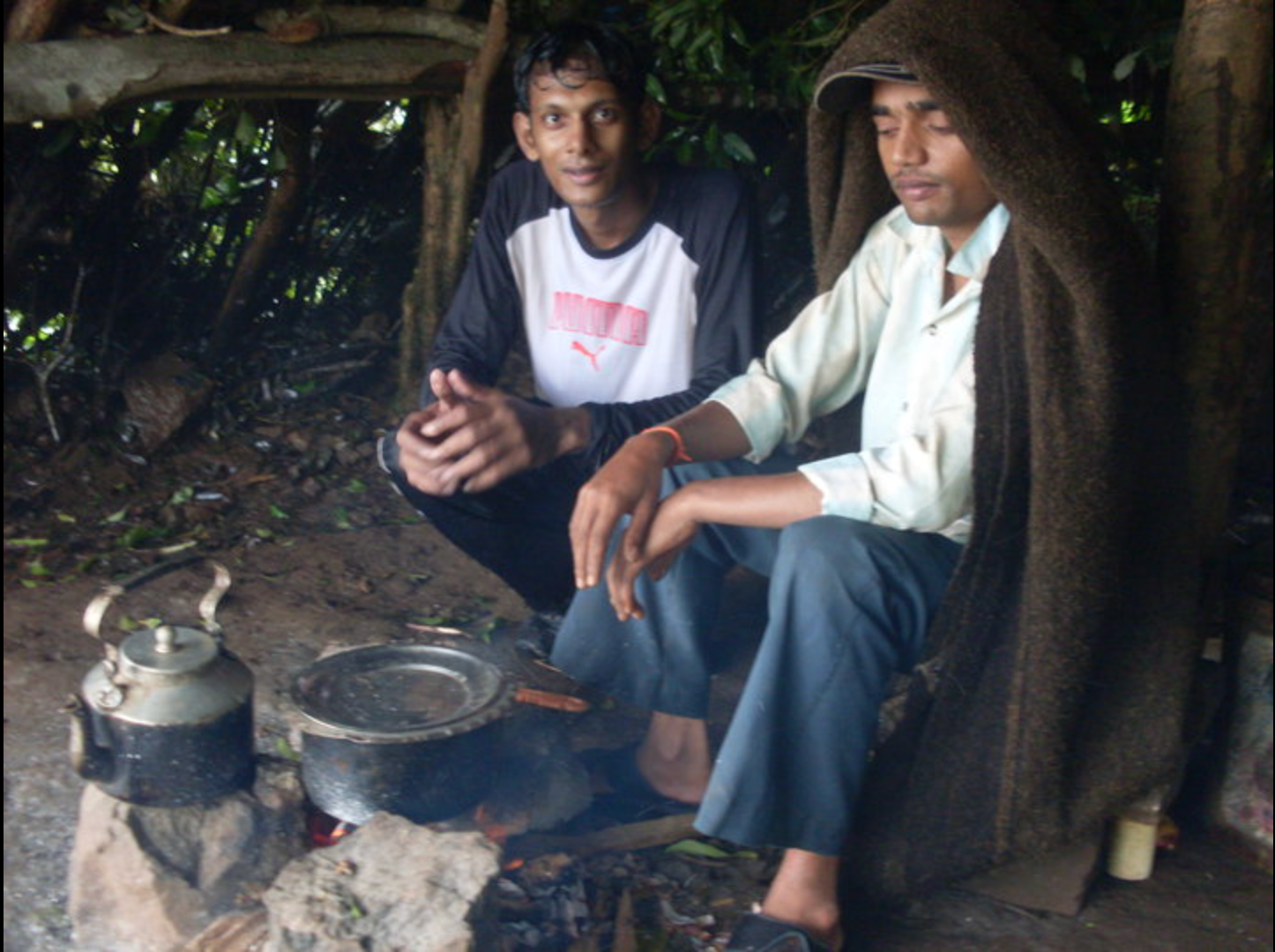
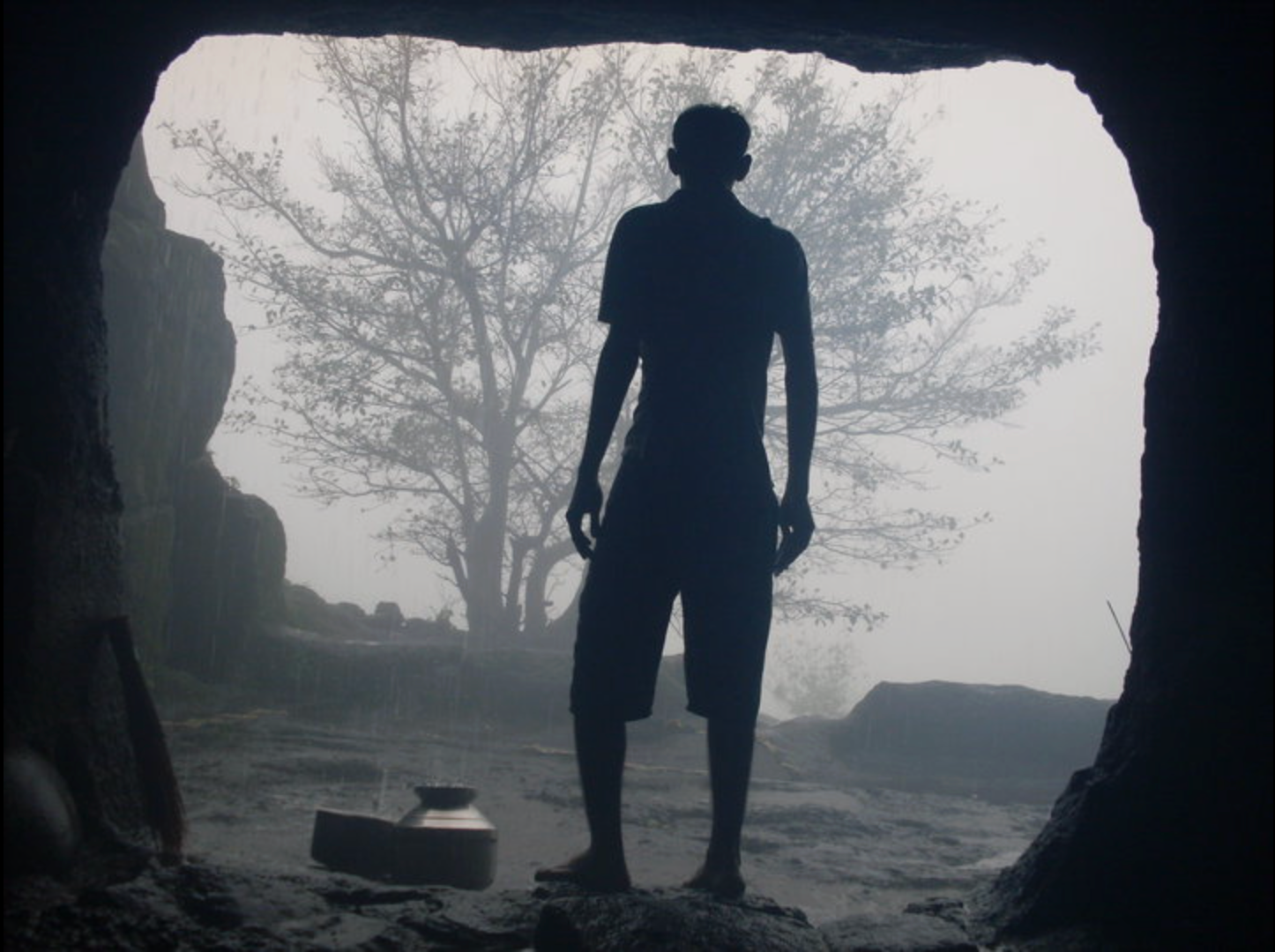
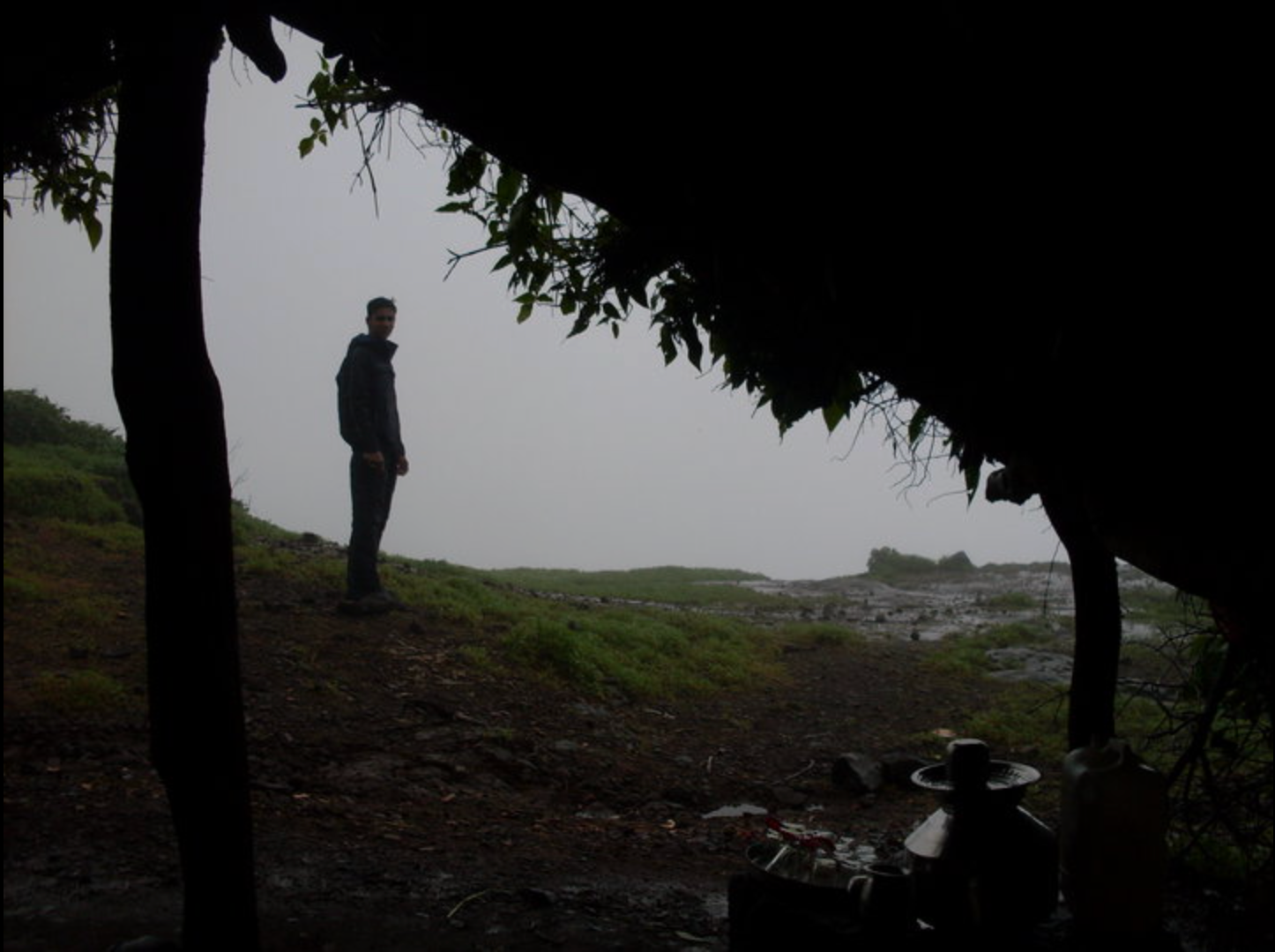
When we finally cleared the rock face and reached the top, the reward was a different kind of intensity. We ducked into a villager’s hut to escape the lashing rain, letting the heat from a small wood fire take the edge off the cold. We took a few quick photos of the mist drifting through the doorway, but with the Harishchandreshwar Temple still a long way off, we couldn’t afford to get too comfortable. We knew the clock was ticking and the weather wasn’t letting up, so after a brief but necessary recovery, we gathered our gear and pushed back out into the elements for the final leg of the journey.
Seven Hills to Harishchandreshwar Temple — Two Hours of Pure Monsoon
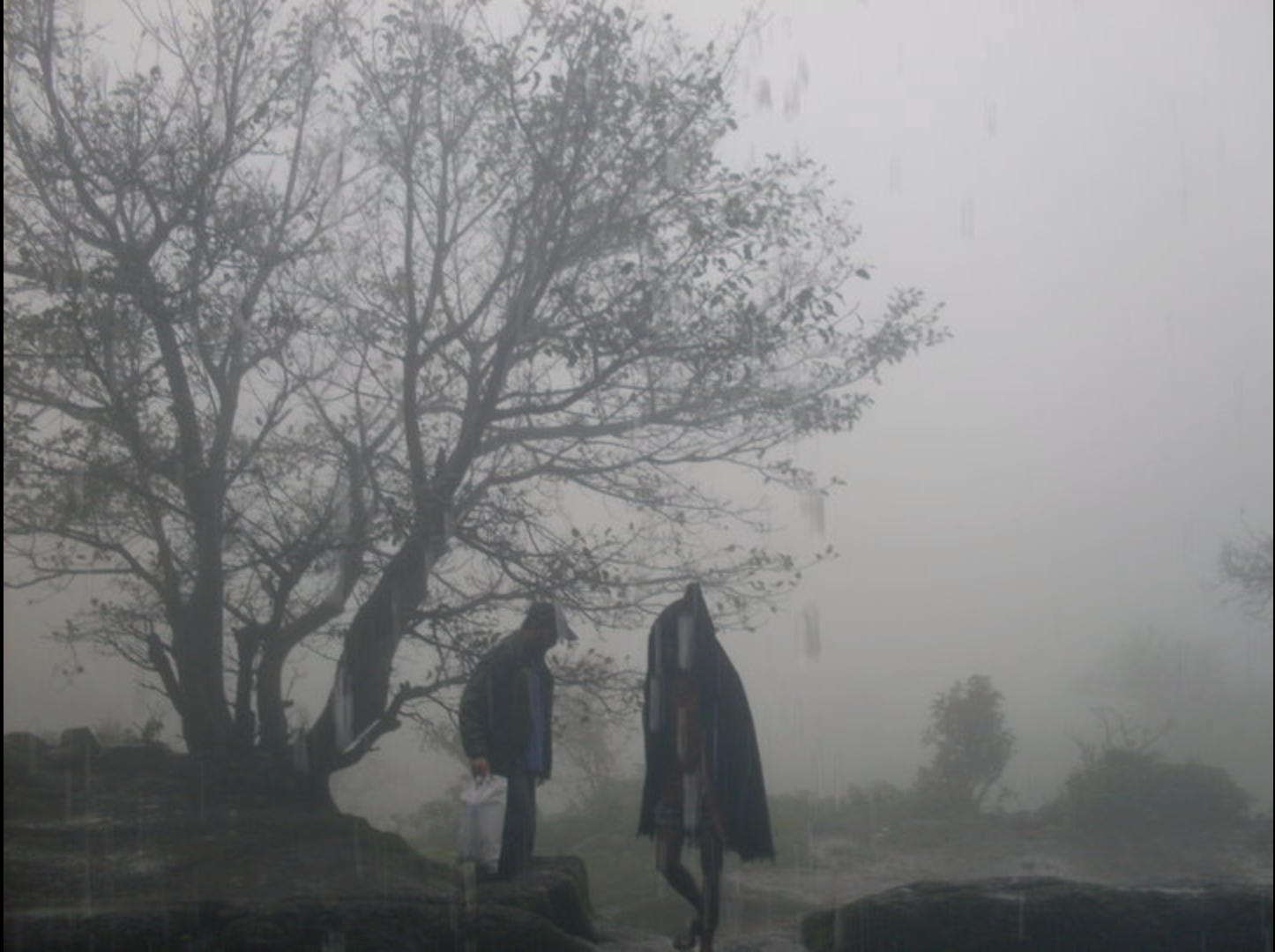
The 5 km stretch after Tolar Khind is a relentless traverse across seven hills. In the height of the monsoon, the landscape was a chaos of raging streams and winds so powerful they felt like they could lift us off our feet. It took us two grueling hours to reach the temple complex. Honestly, if it hadn’t been for a helpful villager we encountered along the way, we would have easily vanished into the jungle; the thick fog had completely stripped us of any sense of direction.
The Caves Near the Temple — When Plans Fall Apart
By the time we reached the temple, the weather had shifted from bad to worse. Torrential rain lashed the hillside, and the fog was so dense it felt like a physical wall. We retreated to the caves near the temple to take shelter and figure out our next move. The situation inside was bleaker than we had hoped for. Most of the caves were waterlogged, and the few dry spots left were already packed with other trekkers. The air was thick with the suffocating smoke of kerosene stoves from those cooking inside, making it impossible to breathe, let alone rest.
It was a hard pill to swallow, but we had to face reality: staying the night was no longer an option. We had to abandon our plans to summit Taramati peak the next morning and, most heartbreakingly, forgo the visit to Konkan Kada. It was a moment of immense frustration—we had come all this way for that view—but the conditions left us with no other choice. The weather had won this round, the mountains had spoken, and we had no choice but to listen.
The Descent to Pachnai — The Most Beautiful Consolation Prize
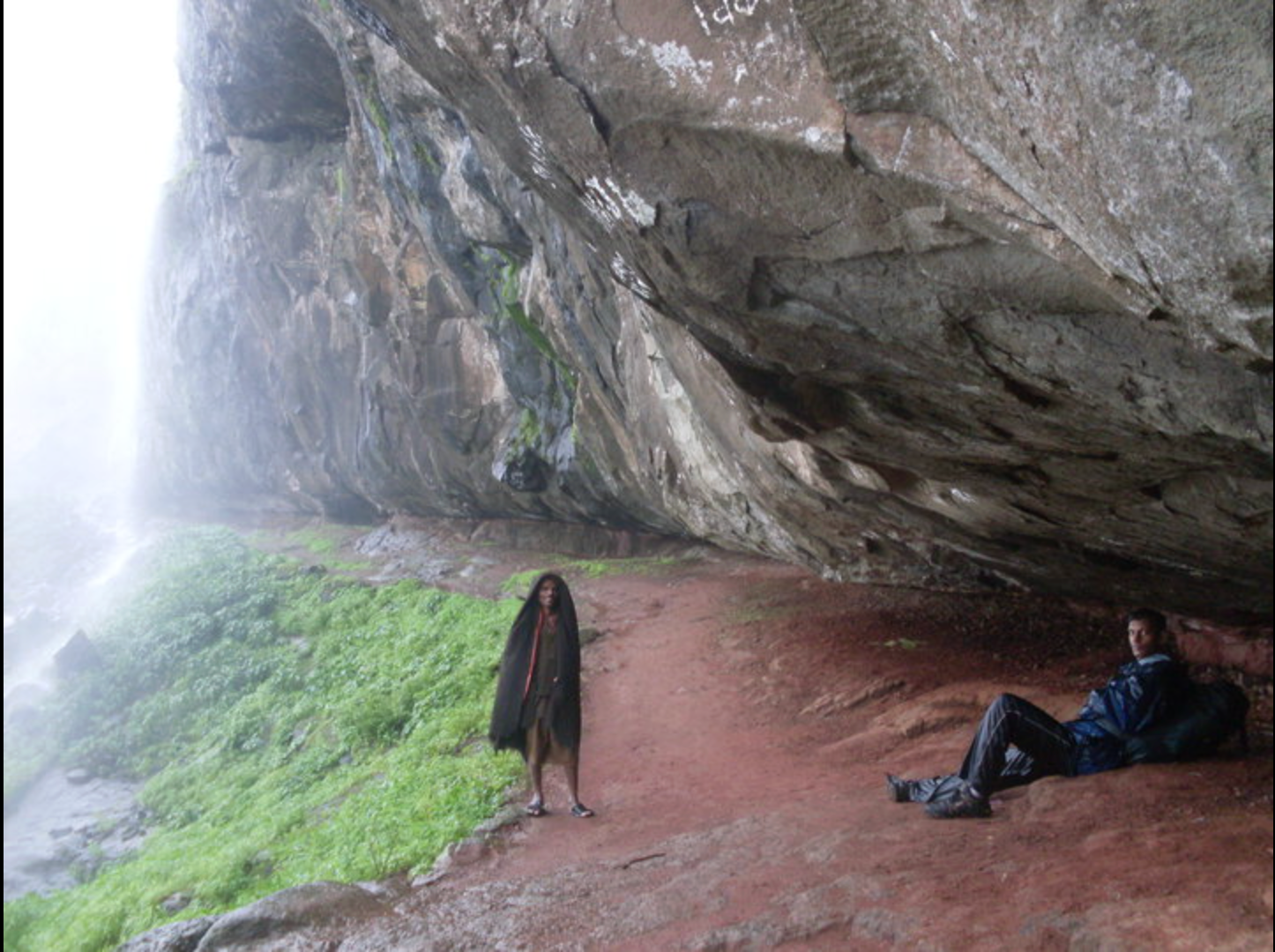
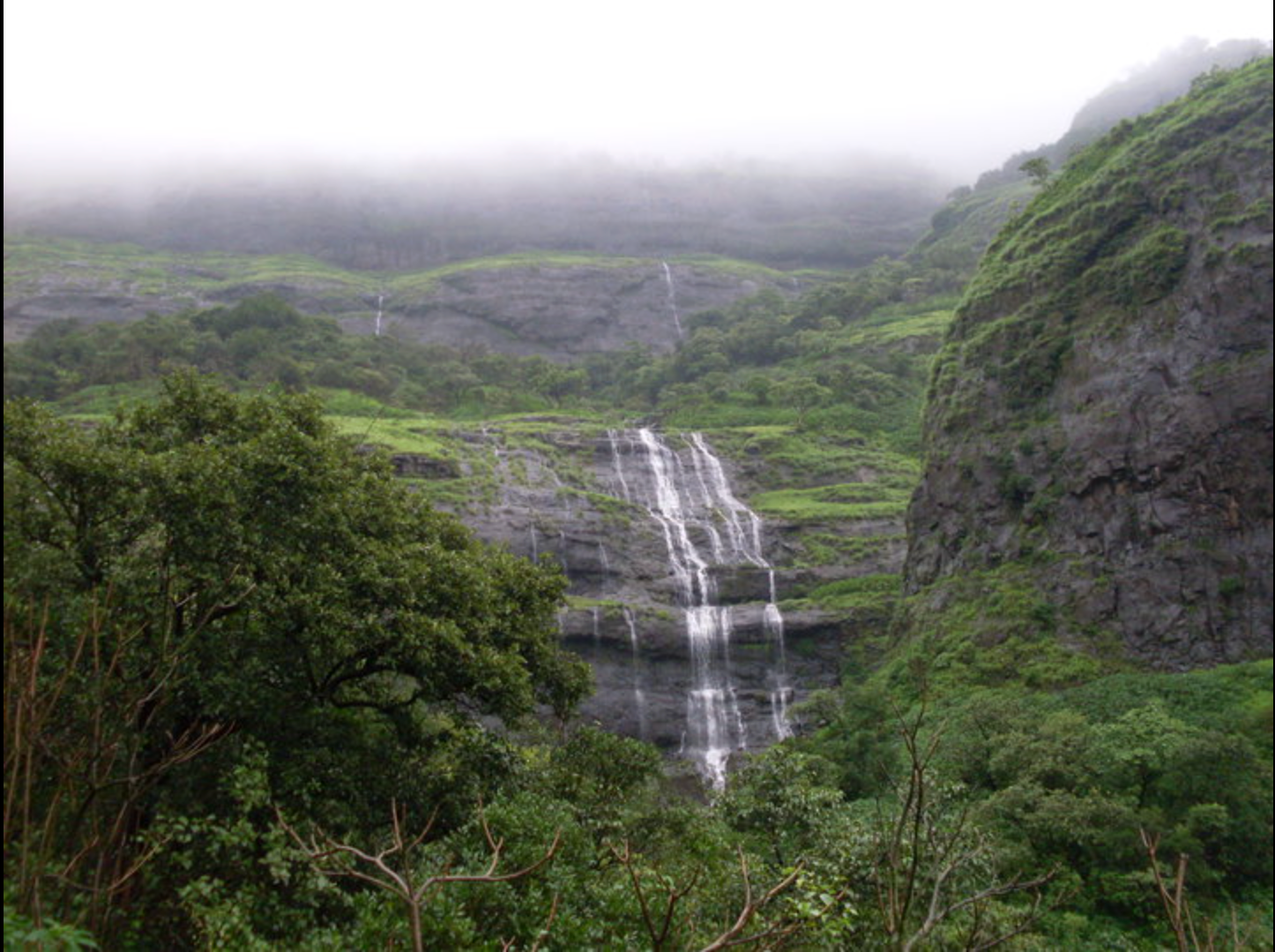
After a staple trekker’s meal of Maggi and hot soup, we made the final call: we would descend the mountain from the other side. We hired a local guide to lead us down the Ahmednagar route toward the village of Pachnai. That 4 km descent turned out to be one of the most incredible monsoon walks I have ever experienced. The trail hugged the mountain face, leading us across numerous waterfalls that were in full, roaring form. Every turn revealed a new panoramic view of the surrounding ranges, each peak draped in a vibrant, rain-washed green. It was a masterclass in Mother Nature’s magnificent bounty. Even though we had missed the Kada, this walk felt like a hard-earned reward. It’s a route I would recommend to any passionate trekker—not just as a way down, but as a destination in itself.
A Night in Pachnai — The Part I Think About Most
We soon reached the village of Pachnai, where Dinkar—the local who had guided our descent—graciously invited us into his home. With no other options, we accepted his invitation with deep gratitude. His humble house felt surprisingly luxurious to our tired limbs as we crawled into our sleeping bags for some much-needed rest.
By evening, Dinkar served us a cup of herbal tea that finally cut through the chill of the monsoon weather. As we sat conversing with him and a few other villagers, the reality of their daily lives began to sink in. We realized the extent of the struggle the village faced: no electricity, no medical facilities, and a lack of proper schooling. It was a sobering contrast to the ‘Incredible India’ we see in brochures—sitting there in my high-tech sleeping bag, I felt the weight of my own privilege against their perennial struggle.
Despite their limited means, our host spared no effort to make us feel at home. It was humbling to see him stretch his resources to please us. He even brought out freshly laid eggs from his small poultry, which were likely intended for his own children’s breakfast. That night, we shared a hearty meal of Egg Bhurji, Maggi, and the most delicious bhakri prepared by Dinkar’s elderly mother. Eating that meal, prepared with so much care in such a warm, homely atmosphere, was the perfect end to a long day. We fell into a deep, peaceful sleep, grateful for the roof over our heads and the kindness of strangers.
What This Harishchandragad Trek Left Me With
Reflecting back on the trek, every moment spent amidst the torrential rains, dense fog, and high-velocity winds felt like a badge of honor. Successfully completing such a challenging route, coupled with the raw, authentic experience of a traditional homestay in Pachnai, left us with a deep sense of fulfillment. This journey remains a defining chapter of my travels—not just for the adrenaline and the thrill, but for the quiet, resilient kindness of the village life we encountered along the way.
The following morning, we caught the first and only ST bus connecting Pachnai to the rest of the district. The bumpy ride to Rajur led us to a local jeep, which eventually dropped us at the Kasara railhead for the final leg back to Mumbai. As the train rattled toward the city, the “dreadful” commute of Friday felt like a lifetime ago. I returned home exhausted and soaked to the bone, but already planning the next escape—ready to continue my lifelong love affair with the mountains.
Harishchandragad Trek — Common Questions
What is the best time to visit Harishchandragad?
Harishchandragad is beautiful year-round but each season offers a completely different experience. Monsoon (June–September) is the most dramatic — lush green landscapes, roaring waterfalls on the Pachnai route, and fog so thick it turns the plateau into another world. It’s also the most challenging and requires experience. Post-monsoon (October–November) is arguably the best time: the trails are still lush, the weather is cooler, and visibility is clear enough to actually see Konkan Kada in all its glory. Winter (December–February) offers crisp, clear days with the best summit views of Taramati Peak and the surrounding Sahyadri ranges. Pre-monsoon (March–May) is the driest but can be hot at lower elevations. If it’s your first time and you want the full experience without the monsoon risk, aim for October or November.
Can you stay overnight at the top of Harishchandragad?
Yes — and the options have improved significantly. The natural caves near Harishchandreshwar Temple have always been the traditional camping spot, but in recent years local villagers from Pachnai have started setting up seasonal camps near the plateau during the peak trekking season (roughly October to May). These offer basic but proper shelter, bedding, and home-cooked meals. Note that these village camps do not operate during the monsoon months (June–September). For monsoon treks, the best option is to descend to Pachnai and arrange a homestay with locals like Dinkar, who has hosted trekkers for years.
Is Harishchandragad safe to trek during monsoon?
Harishchandragad in monsoon is one of the most rewarding but also most demanding treks in Maharashtra. The trails become slippery, Tolar Khind is genuinely dangerous in heavy rain, and fog can strip you of direction completely. It’s not recommended for first-time trekkers without an experienced guide. If you’re prepared and willing to accept that the mountain may not give you everything you planned for, the monsoon version is absolutely spectacular.
What is the base village for the Harishchandragad trek?
The most common base is Khireshwar village, reached from Khubi Phata where the ST bus stops. Some trekkers also start from Pachnai on the Ahmednagar side. From Mumbai: train to Kasara → ST bus to Khubi Phata → 5 km walk to Khireshwar.
What is Tolar Khind on the Harishchandragad trek?
Tolar Khind is a 100-foot near-vertical rock wall that marks the gateway to the Harishchandragad plateau. It’s the most technical section of the standard Khireshwar route — requiring climbing with hands and feet — and is the most physically demanding part of the trek.
What is Konkan Kada at Harishchandragad?
Konkan Kada is Harishchandragad’s iconic concave cliff, offering a dramatic view of the Konkan plains far below. It’s considered one of the most spectacular viewpoints in the entire Sahyadri range. Monsoon clouds can obscure the view entirely — as happened to us on this trip.
How do you get to Harishchandragad from Mumbai?
Train from Mumbai to Kasara (Central Line) → overnight ST bus to Khubi Phata (arrives ~3–4 AM) → 5 km walk to Khireshwar village → trek to Harishchandragad. Return via Pachnai → jeep to Rajur → bus/jeep to Kasara → train back to Mumbai.